
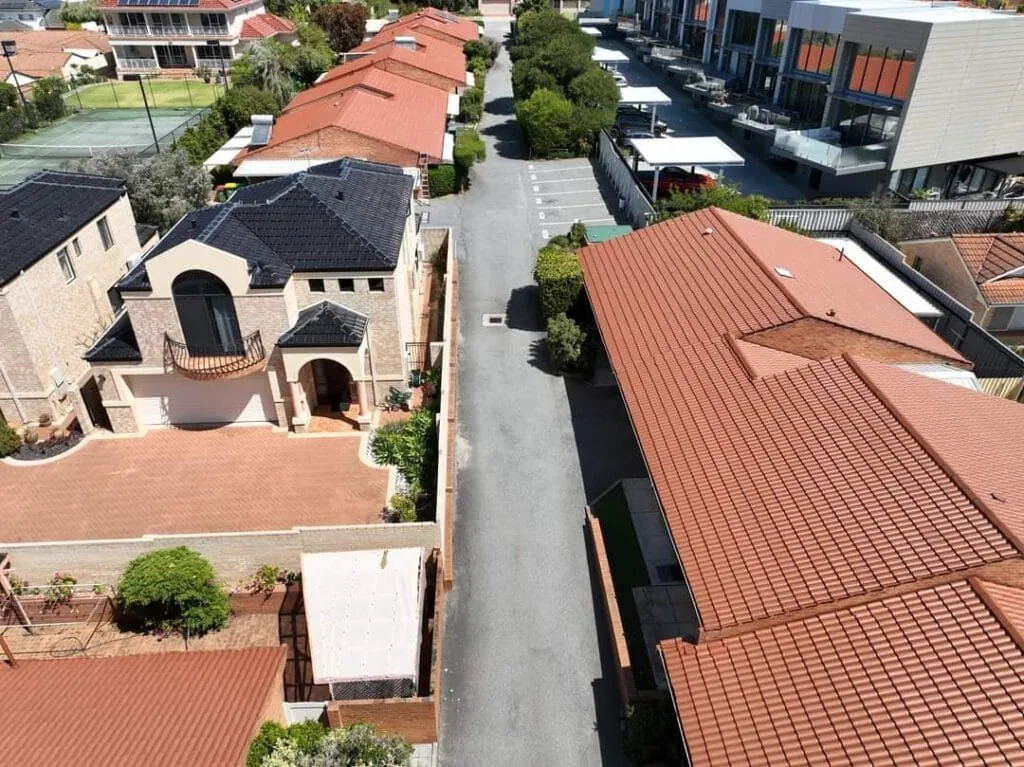
Every Perth homeowner knows basic roof maintenance is part of home ownership. Clearing gutters, replacing the occasional slipped tile, hosing off debris. There is a critical line between safe DIY maintenance and problems that need professional expertise.
Perth's harsh climate makes recognising that line even more important. Scorching summers regularly exceed 35°C. Sudden winter downpours can dump months of rain in days. Coastal suburbs battle constant salt-laden air that corrodes metal and degrades sealants. Under these conditions Perth roofs age faster than you would expect, and a 20 year old roof here can show wear equivalent to a much older roof in a milder climate.
This article covers nine warning signs that point to deeper structural, safety or health risks. These are not routine maintenance issues. They are problems where a DIY patch will not solve the underlying cause, and may actually make the repair more expensive down the track.
Step back from your home and look along the roofline. Look for sagging sections, visible dips, wavy ridge lines, or areas where the roof appears uneven. These point to structural problems, not just surface wear.
Perth's climate subjects roofs to constant expansion and contraction. Materials expand in intense summer heat, then contract overnight and through winter. Combined with occasional heavy rain events, those cycles weaken timber battens, rafters and structural connections over time. Termite damage or rot compounds the problem in older homes.
A sagging roofline signals serious structural issues:
Proper assessment means entering the roof space, understanding structural load paths, checking timber condition, and sometimes consulting a structural engineer. That work sits well beyond handyman capability.
A sagging section is a late-stage warning. The roof could fail suddenly under additional load, whether that is a person climbing up to investigate or water weight during the next storm. Professional roof repairs should be scheduled immediately when structural movement is detected.
You patched a leak with sealant or replaced a cracked tile. The problem seemed solved. Then after the next rain the stain reappears, sometimes in a slightly different spot. Or you have reached the point where you know the roof will leak with every heavy rain.
When leaks return after surface repairs, the real problem lies elsewhere. It may be hidden in the sarking layer, where the waterproof membrane beneath your tiles is torn, degraded or improperly installed, and surface patches cannot address a membrane failure. It may be within the flashing system, where corroded, badly lapped or missing flashing lets water track behind tiles and under metal, so the visible leak point is only where water finally emerges rather than where it enters. It may be the roof design itself, where some valley configurations cannot handle Perth's sudden, intense downpours without modifications like wider valley trays, storm diverters or raised edges.
Most homeowners do not realise that water rarely enters directly above the visible stain. Water travels laterally through insulation, along battens and through ceiling cavities before it finally drips onto your ceiling. Professional leak tracing, often using moisture meters or thermal imaging to detect hidden damp areas, is frequently the only way to find the true entry point.
Just because a visible stain dried up does not mean you fixed the leak. Moisture trapped in insulation batts and timber framing silently feeds mould growth and wood rot. You cannot see it happening, but it costs you through deteriorating structural timber, health impacts from hidden mould colonies, and higher energy bills as wet insulation loses a large part of its thermal performance.
When leaks recur despite DIY attempts, it is time to book a professional roof restoration that addresses the root cause instead of treating symptoms.
Health authorities classify mould in damp buildings as an air quality and health hazard, not merely an aesthetic problem. Mould can establish within 24 to 48 hours in persistently damp environments, and some types produce substances that cause respiratory problems, allergic reactions and other health issues.
Spraying bleach on visible mould treats the symptom while the underlying cause keeps damaging your home. What you see is the tip of the iceberg. Behind that ceiling you likely have water-saturated insulation batts losing thermal performance, damp timber framing beginning to rot, mould colonies growing through materials you cannot see, and an ongoing water entry point that remains unidentified and unfixed.
This work often requires removing ceiling linings, which is specialised work needing coordination between roofers, builders and, in severe cases, licensed mould remediators.
Rising cooling or heating bills without explanation? Check your roof. Wet insulation does not just harbour mould, it loses its ability to keep your home comfortable. Your air conditioning works harder and longer, so a small roof leak quietly raises your energy bills every month.
Once your ceiling shows these symptoms you have moved past minor leak territory and the structure is compromised. Swollen or sagging plasterboard can collapse suddenly, which creates a safety risk. Moisture has usually spread much further than the visible damage suggests. A professional assessment determines the repair extent: what needs replacement and what can be dried.
Perth's intense summer heat dries out surface layers while deeper timber and insulation stay saturated. The stain looks better, which creates a false sense the problem resolved itself while hidden damage continues underneath. Professional inspections can use moisture meters or thermal imaging to reveal what is happening behind the ceiling, not just what is visible on the surface.
This is not about one cracked tile or a single rust spot. You are noticing patterns:
Damage appearing in multiple areas sends a clear message: the roof is not failing in one spot from an isolated incident. Either it is reaching the end of its serviceable life, or the original installation was flawed.
Playing whack-a-mole with individual problems on a systematically failing roof wastes money. Once more than roughly a quarter of the roof shows significant deterioration, restoration or replacement becomes more cost-effective than ongoing spot repairs. A professional assessment clarifies whether you need targeted repairs for genuinely localised damage, full restoration including re-bedding, re-pointing and section replacement, or complete replacement because the roof has reached end of life. Our cost guide sets out what each path typically costs in Perth.
Re-bedding entire ridge lines, replacing dozens of tiles or renewing flashing systems requires safety compliance with proper fall protection, technical knowledge of the correct materials and techniques for your roof type, root cause analysis rather than symptom patching, and workmanship warranties that meet Australian standards.
If your roof approaches these age ranges while showing multiple problem areas, you need a professional strategy discussion rather than more DIY patches.
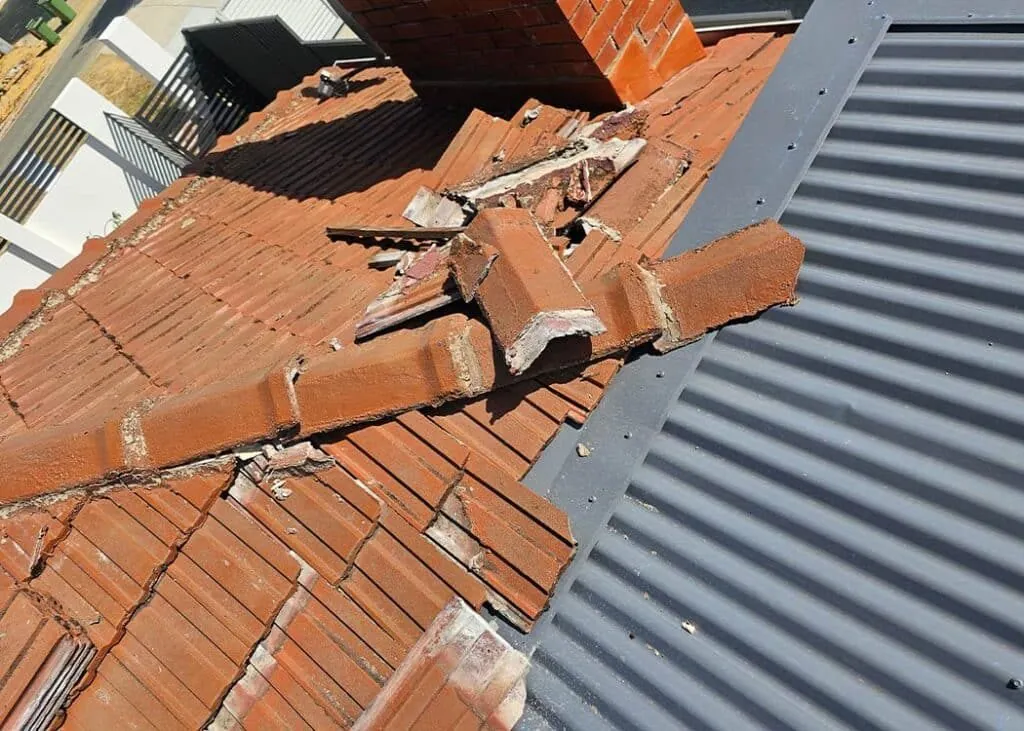
Gaps that allow daylight or air movement reveal problems with the roof's weather barrier: shifted or missing tiles creating openings, failed or missing ridge capping, gaps at flashing points around penetrations, compromised sarking beneath the tiles, or damaged and compressed insulation batts.
Uneven hot spots or cold zones in the rooms below indicate the roof's thermal barrier is compromised. Water ingress compresses or damages insulation batts and reduces their effectiveness. Gaps in sarking or around flashings create air leaks that bypass insulation entirely.
Properly sealing these gaps involves working safely at height while lifting existing tiles or metal sections, reinstalling sarking with correct overlaps and sealing, ensuring proper insulation placement without compression, replacing tiles with proper fixing techniques, and meeting current building codes for all work.
This is physically demanding work that requires specific roofing system knowledge. A single mistake, whether an improper sarking overlap, incorrectly seated tiles or inadequate ventilation after sealing, creates new problems including condensation and trapped moisture.
Your energy bills have climbed noticeably, particularly cooling costs in summer or heating in winter. You have not changed usage patterns, added appliances or moved the thermostat, and the bills keep rising.
For Perth homes, where summer cooling accounts for a significant share of annual energy costs, roof performance directly affects what you pay. A compromised thermal barrier means you are effectively air conditioning, or heating, the outdoors.
Understanding thermal performance means understanding how roofing material, sarking, insulation, ventilation and ceiling construction work together as a system. Common DIY mistakes include adding more insulation without addressing moisture sources, which traps dampness; blocking ventilation while trying to seal air leaks, which creates condensation problems; and failing to identify compromised sarking or failed flashing as the root cause.
Professional energy assessments or thermal imaging inspections identify exactly where heat enters the home and what is causing it. In Perth's climate, those improvements often pay for themselves through reduced energy costs within a few years.
This is not a maintenance issue or even just a leak problem. Water and electricity create fire risks, electrocution hazards and equipment damage. The moment you see water near electrical fittings:
Proper repairs require tradespeople working together to isolate the electrical system, identify and fix the water entry point, assess damage to wiring and fixtures, and ensure complete drying before power is reinstated.
Perth's mix of intense summer heat and winter storms creates expansion and contraction in roofing materials, which cracks or loosens fixtures over time. Metal roofs require extra caution, since they can conduct electricity if faults develop.
Your roof is reaching 20 to 25 years or beyond. Neighbours have roof work happening: new tiles, restoration work, complete replacements. When you mentioned your roof age to a tradie working next door, you got that look.
Perth's intense UV exposure, thermal cycling and occasional severe weather mean roofs here age faster than in cooler, milder climates. A 25 year old Perth roof may show wear equivalent to a much older roof elsewhere.
If multiple homes built around the same time as yours are having roof work done, pay attention. Those homes likely used similar materials and construction methods, faced identical weather, and are hitting the same failure points. Your roof is probably in similar condition. You are just seeing their problems first.
At this age and stage you need more than repair decisions. You need guidance on repair versus restoration versus replacement and what makes economic sense long term, on material selection where modern materials offer better heat reflection and longevity, on future-proofing such as lighter and more reflective colours, added ventilation or upgraded insulation, on building code compliance where current standards may require upgrades, and on warranty and insurance, because professional work provides warranty protection.
A professional roof inspection typically costs a few hundred dollars for a standard Perth home. It gives you an objective condition report, identification of immediate safety concerns, an estimate of remaining serviceable life, and support for an informed decision. That modest investment prevents expensive wrong choices about your home's primary weather protection. Quality roofing companies back their work with comprehensive warranties, and Kili & Cousins provides a 15-year written guarantee on full restorations to give Perth homeowners peace of mind.
Understanding what is safe to do yourself, and when professionals are required, protects both your safety and your investment.
When in doubt, get a professional assessment. An inspection is a small fraction of what you will pay if a minor issue turns into a structural failure, a mould remediation project, or an emergency repair after the next storm.
Understanding why Perth roofs face unique stresses explains why professional assessment matters more here than in milder climates.
Perth receives some of Australia's most intense ultraviolet radiation, which degrades roofing materials, sealants and paint finishes faster than in southern cities.
Daily temperature swings, from 35°C and above during summer days to much cooler nights, cause constant expansion and contraction. Over years, that fatigues materials and connections.
Perth is generally dry, but intense downpours happen. A single winter storm can dump significant rain in a short period, overwhelming inadequate drainage and exposing waterproofing weaknesses.
For suburbs within several kilometres of the ocean, salt-laden air accelerates corrosion of metal roofing, flashing, screws and gutters. Coastal homes need more frequent inspections and may need earlier replacement than inland properties.
Perth's storm season, typically May to August, brings strong winds that lift tiles, tear flashing and cause debris impact damage.
Qualified local roofers understand these factors. They know what to look for, how the climate affects different materials, and which prevention measures work best for Perth conditions.
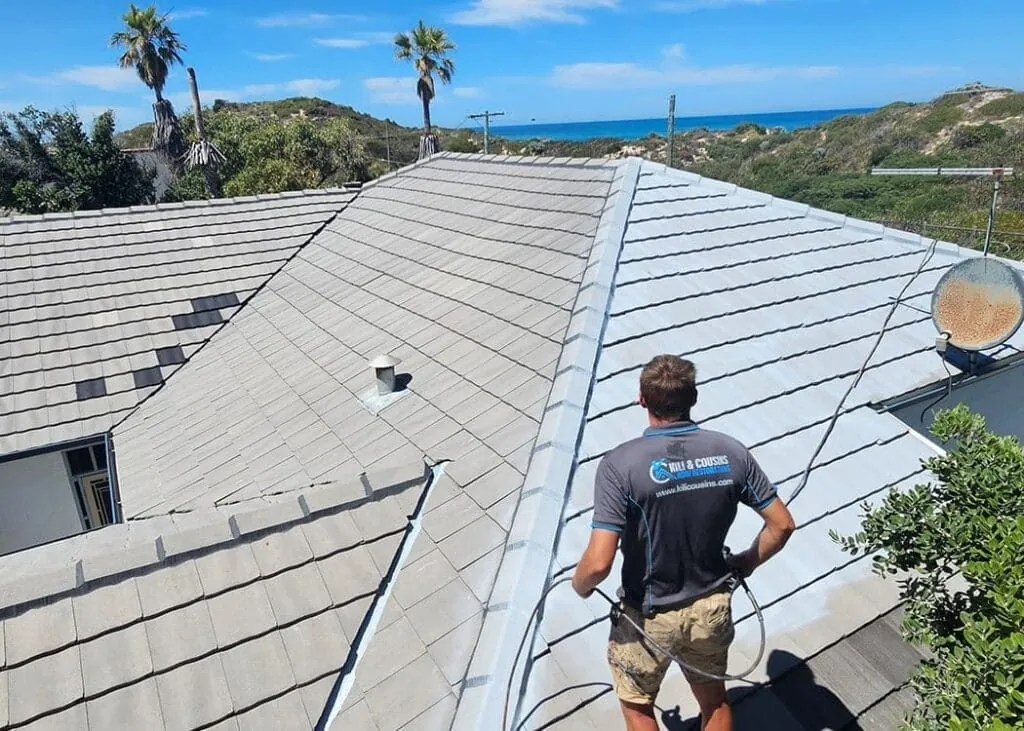
If you have recognised one or more warning signs in your home, follow this plan.
This documentation helps professional roofers and can support insurance claims for storm damage.
A thorough inspection typically covers the entire roofing system, including tiles or metal sheeting, flashing, gutters, drainage and ventilation, along with interior signs like ceiling staining and structural movement.
Having realistic cost expectations helps you budget and avoid being caught off guard. For a standard residential roof in Perth, a professional inspection generally sits in the low hundreds of dollars, depending on roof size, access and report detail.
Actual repair pricing depends on roof size, pitch, access and damage severity, but the work usually falls into four bands: minor repairs such as small leaks, a handful of tile replacements and localised flashing work; major repairs such as extensive repointing, valley replacements and repairing sagging sections; full restoration covering cleaning, repairs, re-bedding, re-pointing and recoating the whole roof; and complete replacement with a new tile or metal roof, usually the highest-cost option.
Discuss current pricing with your roofer so you can compare the cost of repair against full restoration on your specific home. Our Perth roof restoration cost guide lays out the typical ranges.
If you discover an active leak during a storm, these immediate steps help limit damage until professionals arrive.
Never go on the roof during a storm or when the roof is wet. If weather conditions are safe and you are competent on ladders, you can use tarps to cover damaged areas, extending well beyond the visible damage; clear obvious debris from gutters and downpipes to improve drainage; and photograph exterior damage from the ground using zoom or binoculars. For anything beyond basic containment, a professional emergency service is the safest and most effective option.
Your roof is your home's primary defence against Perth's harsh elements. When that defence is compromised, damage compounds quickly and expensively.
DIY maintenance has its place: cleaning gutters, clearing debris, basic visual monitoring. Those tasks help extend a roof's life. Professional intervention becomes necessary when warning signs indicate problems beyond surface fixes, because those need expertise to diagnose correctly, proper tools and safety equipment to address, and skilled workmanship to fix permanently.
The cost of a professional inspection or a well-planned repair is modest compared with emergency repairs after failure, structural repairs from long-term leaks, mould remediation and internal rebuilds, or the health impacts of ongoing moisture problems.
Your roof does not fail overnight. It gives you warnings, and this article has shown you what those warnings look like.
The question is not whether you will deal with these problems. It is whether you address them while you still have choices, or wait until they become expensive emergencies. If you have seen any of these signs in your Perth home, do not wait for the next storm to reveal how bad it really is. Get a professional assessment, understand your options, and make the decision while you still control the timing and the cost.
We come out, get on the roof, and tell you exactly what it needs and what it costs. If it doesn't need work, we'll tell you that too. The look costs nothing.
Roof restoration in Perth backed by a 15-year written warranty guarantee: what the process covers and what moves the cost.
The key factors that impact gutter replacement cost, plus the cost vs. value of replacing your home’s guttering system.
Discover some of the top warning signs that you may need a tile roof restoration sooner than you think.
We come out, get on the roof, and tell you exactly what it needs and what it costs. If it doesn't need work, we'll tell you that too.